
Quick answers
What is a no-spend month?
A month in which you spend only on essentials you've listed in advance, such as rent, bills, groceries, transport and medicine. Everything else waits until the month is over.
What counts as an essential in a no-spend month?
You decide, in writing, before you start. Most people allow housing, utilities, groceries, transport to work, medicine, childcare and debt payments. Takeout, clothes, home goods, subscriptions you don't use and impulse buys usually don't make the list.
Is there an app to track a no-spend month?
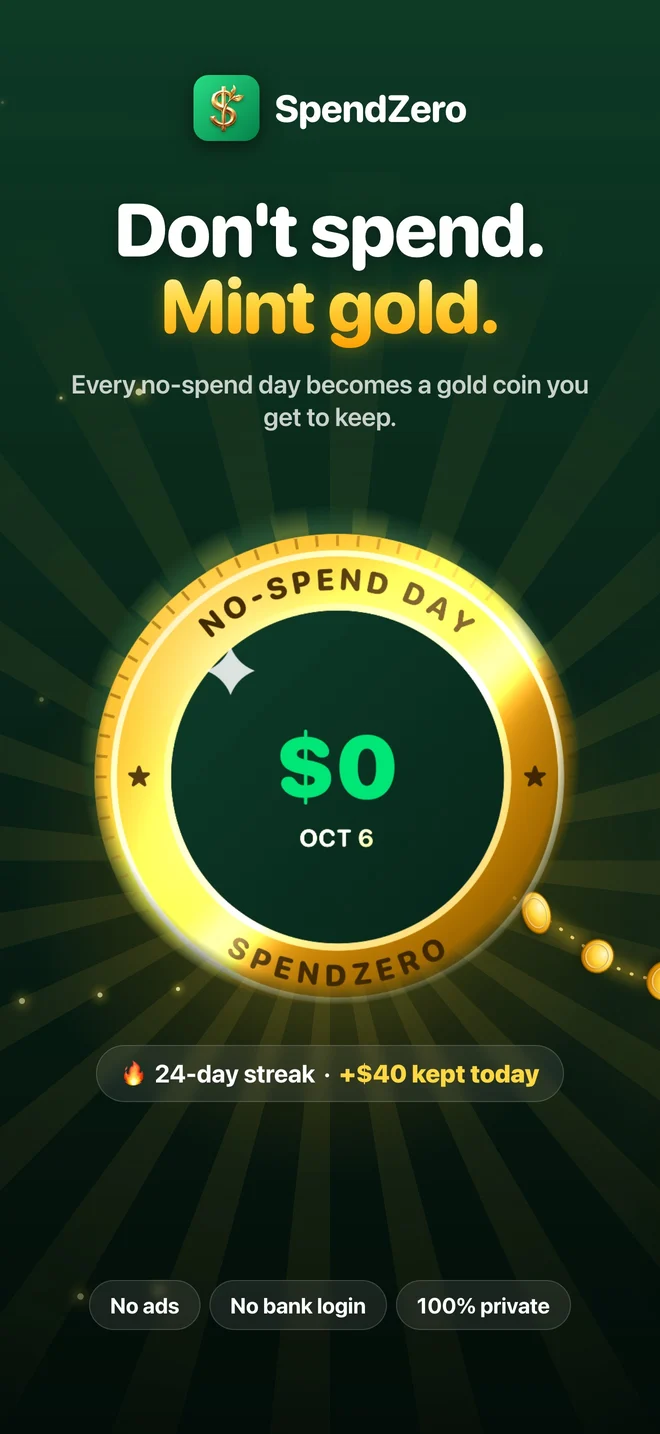
SpendZero is an iPhone app from GW Labs for this. One tap seals each no-spend day as a gold coin, a calendar fills as the month goes on, and groceries and transport don't break your streak. It never connects to your bank.
Before day 1
An hour of setup saves the month.
- Write your essentials list. If it's not on the list, it waits. The no-spend challenge rules guide has a full list to start from.
- Look at the calendar. Mark birthdays, trips and anything already paid for. Decide now how you'll handle each one.
- Stock up on what you'd otherwise buy mid-month: basics for the kitchen, toiletries, anything you know runs out.
- Make it harder to buy. Unsubscribe from store emails, delete shopping apps from your home screen, and remove saved cards from the sites you use most.
- Pick where the money goes. A named goal, like an emergency fund or a debt, is easier to protect than "savings".
Week 1: the easy week
Motivation is high. Use it to build the habit you'll need later.
- Mark each no-spend day at the same time every evening.
- Cook from what's already in the kitchen.
- Start a list titled "After the month". Anything you want to buy goes there instead of into a cart.
Week 2: the urges show up
The novelty is gone and something will tempt you. This is the week most people quit.
- When you want something, add it to the list and wait 48 hours.
- Notice when the urges come: bored in the evening, scrolling, after a hard day.
- Swap the habit, not just the purchase. If you shop when you're bored, plan what you'll do instead.
Week 4: finish and decide what's next
- Keep marking days. The last week is where the streak matters most.
- Read your "After the month" list. Most of it won't matter to you anymore. Cross those off.
- Add up what you didn't spend, and move it to the goal you picked before the last day.
If you slip
One unplanned purchase doesn't end the month. Write down what you bought and what set it off, then carry on the next day. If the item can go back, return it. A month with two slips still beats a normal month.
After the month
Don't celebrate by spending it. Move the money first. Then choose one or two rules to keep, such as the 48-hour wait or one no-spend day a week. Some people repeat the month once a quarter.
When this is not the right tool
A no-spend month is a habit tool, not financial advice. It won't fix a budget where essentials cost more than you earn. If you're behind on bills or debt, a nonprofit credit counselor can go through your options. If you feel unable to control your spending, or it's causing serious distress, talk to a doctor or therapist.
Frequently asked questions
Do groceries count in a no-spend month?
Groceries are an essential for almost everyone. Set a normal grocery budget and stick to it. The month is about extras, not food.
Can I do a no-spend month with a partner or family?
Yes, and it's easier when everyone in the home agrees on the essentials list. Give each person a small allowance if a total freeze causes arguments.
What's the best month for a no-spend month?
One without big fixed costs you can't move. January and February are popular because they follow holiday spending.
How much can I save in a no-spend month?
It depends on what you normally spend on extras. Look at last month's non-essential spending for a rough number.
Is SpendZero free?
Marking no-spend days, your streak, the Mint Calendar, the Coin Vault and your money not spent are free, with no account and no ads. SpendZero Pro adds challenges, streak freezes, quests, badges, insights and export.

How SpendZero does it
SpendZero is an iPhone app from GW Labs for no-spend days and months.
- One tap each evening seals a no-spend day as a gold coin, and your streak grows.
- The Mint Calendar shows the month filling in, so you can see every day you held.
- Groceries and transportation don't break a no-spend day.
- A running count of the money you didn't spend.
- No bank login, no account, no ads, no tracking.
- Free: marking no-spend days, the streak, the Mint Calendar, the Coin Vault, money not spent, levels and the wealth tree. SpendZero Pro adds challenges such as the 30-Day No-Spend Challenge, streak freezes, quests, badges, insights and export. New users get a 3-day Pro preview.